Electric vehicles are changing how automotive teams work.
For many years, vehicle maintenance was mostly mechanical. Technicians worked around engines, fuel systems, gearboxes, brakes, and electrical components that were familiar to them. But EVs are different. They introduce high-voltage batteries, orange cables, inverters, charging systems, isolation procedures, and battery safety risks that require a different level of awareness and discipline.
This is where EV High-Voltage Safety & Maintenance VR Training becomes important.
Before a technician touches a real EV system, they should understand what can go wrong, which steps must be followed, what PPE is required, and how to identify unsafe conditions. Classroom learning can explain the theory, but EV maintenance needs practical decision-making. VR training gives technicians a safe way to practice these procedures without putting themselves, the workshop, or the vehicle at risk.
What Is EV High-Voltage Safety Training?
EV high-voltage safety training teaches technicians, service teams, workshop supervisors, and automotive students how to work safely around electric vehicle systems.
A typical EV can include high-voltage components such as:
- Battery pack
- Inverter
- Motor controller
- On-board charger
- DC-DC converter
- High-voltage cables
- Charging port
- Service disconnect
- Cooling systems connected to the battery or power electronics
The purpose of high-voltage safety training is not only to teach what these parts are. The real goal is to help technicians understand how to identify hazards, follow the correct shutdown process, use PPE, verify isolation, and avoid unsafe actions during inspection or maintenance.
In EV maintenance, one missed step can create serious risk. That is why training must be practical, repeatable, and easy to assess.
Why Traditional EV Training Is Not Enough
Most EV safety training programs include classroom sessions, videos, manuals, and sometimes physical demonstrations. These are useful, but they have limitations.
A trainer can explain how to isolate a high-voltage system, but every technician may not get enough hands-on practice. A training institute may not have enough EV vehicles or battery packs for every student. A service center may not want junior technicians practicing on live or expensive vehicle systems.
This creates a gap between “knowing the procedure” and “performing the procedure correctly.”
That gap is dangerous.
EV technicians need to practice the full workflow, not just remember the steps. They need to make decisions under realistic conditions. They need to identify warning signs, select the right PPE, follow lockout/tagout steps, use virtual tools correctly, and know when to stop and escalate the issue.
VR training can help close this gap.
How VR Helps in EV High-Voltage Safety Training
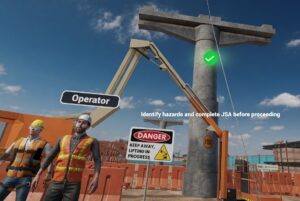
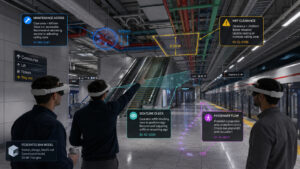
Virtual Reality allows technicians to enter a simulated EV workshop and practice maintenance procedures in a controlled environment. The trainee can interact with the vehicle, identify high-voltage components, follow safety steps, and receive feedback when a mistake is made.
The biggest advantage of VR is that mistakes become learning moments, not real-world incidents.
For example, a trainee can practice what happens if they forget to wear insulated gloves, skip a verification step, touch the wrong component, or fail to mark the vehicle as unsafe. The system can immediately show the consequence and guide them back to the correct process.
This kind of experiential training is difficult to create using only classroom sessions.
What Can Be Included in an EV High-Voltage Safety VR Module?
A well-designed EV maintenance VR training module can include several practical scenarios.
1. EV Workshop Safety Orientation
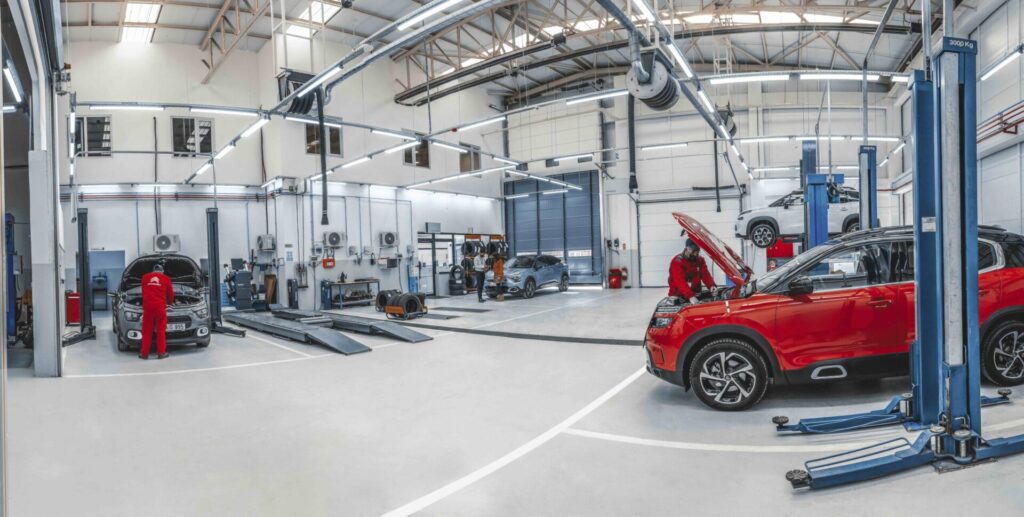
The trainee enters a virtual EV service bay and learns how to identify restricted zones, warning signs, emergency equipment, insulated tools, PPE stations, and vehicle safety labels.
This helps new technicians understand the EV workshop environment before working on an actual vehicle.
2. High-Voltage Component Identification
The trainee learns to identify key EV components such as the battery pack, inverter, orange cables, charging port, motor controller, service disconnect, and DC-DC converter.
The module can test whether the trainee can distinguish between low-voltage and high-voltage systems.
3. PPE Selection and Inspection
Before starting the task, the trainee must select the correct personal protective equipment. This can include insulated gloves, face shield, safety shoes, protective clothing, and insulated tools.
The training can also include PPE inspection, such as checking gloves for damage before use.
4. Vehicle Shutdown and Isolation Procedure
The trainee follows the correct shutdown process before maintenance. This may include switching off the vehicle, securing the key, waiting for discharge time, accessing the service disconnect, and following the required isolation steps.
The VR system can track whether the trainee follows the correct sequence.
5. Lockout/Tagout Workflow
Lockout/tagout is an important part of high-voltage safety. In VR, the trainee can practice placing warning tags, securing the vehicle, and making sure other team members know the vehicle is under service.
This creates discipline around safety communication.
6. Voltage Verification Simulation
After isolation, the trainee must verify that the system is safe before continuing. In VR, this can be simulated using a virtual multimeter or testing tool.
This is one of the most important parts of EV maintenance training because it reinforces the habit of verification instead of assumption.
7. Battery Pack Access and Inspection
The trainee can practice safe battery access procedures, inspection steps, and decision-making around damaged, swollen, leaking, or overheated battery packs.
This can be especially useful for training institutes, EV service centers, and fleet maintenance teams.
8. Thermal Runaway Awareness
EV battery incidents are rare, but technicians must know the signs of risk. VR can simulate warning conditions such as smoke, unusual heat, battery damage, or unsafe handling after an accident.
The trainee can learn when to stop work, move away, alert the supervisor, and follow emergency procedures.
9. Mistake-Based Learning
VR can safely show the result of unsafe actions. For example:
- Touching a high-voltage cable without following the isolation process
- Using the wrong tool
- Skipping PPE
- Ignoring warning labels
- Starting maintenance without lockout/tagout
- Assuming the system is safe without voltage verification
Instead of just telling technicians what not to do, VR lets them experience why the safety process matters.
10. Assessment and Reporting
A VR training module can track each trainee’s performance. It can record steps completed, mistakes made, time taken, retry attempts, and final score.
This helps companies and training institutes identify who is ready for advanced EV maintenance and who needs more practice.
Who Needs EV High-Voltage Safety VR Training?
EV high-voltage VR training can be useful for many organizations.
Automotive OEMs
EV manufacturers need to train dealer networks, service teams, and field technicians at scale. VR can help create consistent training across locations.
EV Service Centers
Independent and authorized service centers need technicians who can work safely around EVs. VR helps them train new technicians without depending only on senior staff.
Training Institutes and ITIs
Automotive training institutes can use VR to make EV education more practical. Students can experience real workshop scenarios even when physical EV vehicles are limited.
Fleet Operators
Companies using electric buses, delivery vehicles, electric two-wheelers, electric trucks, or warehouse EVs need maintenance teams that understand battery and high-voltage safety.
Emergency Response Teams
First responders, workshop safety teams, and incident response teams can use VR to understand EV-specific hazards before dealing with real emergencies.
Workshop Supervisors
Supervisors need to understand the full safety workflow so they can monitor technicians, enforce safe practices, and prevent shortcuts.
Why EV Maintenance Training Needs to Be Repeatable
One-time training is not enough for high-risk work.
Technicians need repeated practice to build confidence and muscle memory. EV safety procedures involve step-by-step discipline. The technician must know what to check, when to stop, when to escalate, and how to verify the system before continuing.
VR makes repeat training easier.
A trainee can repeat the same module multiple times until the correct process becomes natural. Companies can also create different difficulty levels, from basic EV awareness to advanced maintenance scenarios.
For example:
- Level 1: EV safety awareness
- Level 2: PPE and component identification
- Level 3: Shutdown and isolation procedure
- Level 4: Voltage verification
- Level 5: Battery inspection and unsafe condition handling
- Level 6: Assessment and certification readiness
This kind of structured progression is useful for both new technicians and experienced mechanics transitioning from ICE vehicles to EVs.
Business Benefits of EV High-Voltage Safety VR Training
For companies, VR training is not only about technology. It solves real business problems.
Safer Technician Training
Technicians can practice risky tasks without exposure to actual high-voltage systems.
Lower Training Dependency on Physical Vehicles
Training institutes and service centers may not always have enough EVs, batteries, or components available for practice. VR can reduce this dependency.
Consistent Training Across Teams
Every trainee receives the same scenario, instructions, and assessment process. This is useful for multi-location organizations.
Faster Readiness
New technicians can learn the basics before touching real vehicles. This helps senior technicians and trainers focus on advanced guidance.
Better Assessment
VR can track whether the trainee followed the correct safety sequence. This makes assessment more objective.
Reduced Risk of Unsafe Shortcuts
When technicians repeatedly practice the correct process, they are less likely to skip important safety steps in the real workshop.
EV Training Should Not Be Only Theoretical
The EV industry is growing, and the maintenance workforce must grow with it. But the quality of training will decide how safe and ready that workforce becomes.
Reading a manual is important. Watching a video is useful. Attending a classroom session is valuable.
But for high-voltage safety, technicians also need practical exposure.
They need to stand in front of a vehicle, make decisions, select tools, verify steps, and understand the consequences of mistakes. VR gives them that experience in a safe, controlled, and repeatable way.
How HapzXR Can Help
HapzXR builds custom VR training simulations for safety, maintenance, and skill development. For EV high-voltage safety and maintenance, we can create interactive VR modules based on your actual training process, vehicle type, tools, workshop layout, and assessment needs.
A custom EV VR training module can include:
- EV workshop orientation
- High-voltage component identification
- PPE selection and inspection
- Vehicle shutdown procedure
- Lockout/tagout workflow
- Voltage verification simulation
- Battery inspection scenarios
- Unsafe condition identification
- Emergency response awareness
- Trainee scoring and reporting
Whether you are an automotive OEM, EV service network, training institute, fleet operator, or safety training provider, VR can help you make EV training more practical, safer, and easier to scale.
Final Thoughts
EV maintenance is not just another version of traditional vehicle service. It requires new skills, new safety habits, and a stronger focus on high-voltage risk awareness.
As more electric vehicles enter the market, organizations will need better ways to train technicians before they work on real vehicles. EV High-Voltage Safety & Maintenance VR Training gives teams a safe and practical way to build confidence, reduce mistakes, and improve technician readiness.
For automotive companies, training institutes, and EV service teams, this is the right time to invest in immersive EV safety training.
Need a Custom EV High-Voltage Safety VR Training Module?
HapzXR can help you design and develop a custom EV maintenance and high-voltage safety VR training simulation for your team.
Contact us to discuss your EV training requirement and explore how VR can make your technician training safer, more practical, and easier to scale.