

VR training / Logistics, Warehousing & Transport
Get teams ready before the next busy shift.
VR training for warehouse hazards, equipment awareness and handling decisions. Help teams rehearse the work before joining active operations.
For logistics providers, distribution centers and fleet training teams

01 / The problem
Busy operations leave little room for trial and error.
- 01
People and equipment overlap
Workers need to recognize changing movement patterns in shared spaces.
- 02
New hires join quickly
Seasonal and rotating teams need consistent preparation before deployment.
- 03
Every facility is different
Routes, loading areas and reporting procedures vary across locations.
02 / See it work
See the work. Then picture your team.
Explore relevant project samples before discussing your own training requirements.
Also on YouTube: VR driving simulation. The driver training simulation we built for VR Motion. Project for VR Motion.
The demo above is a working HapzXR project sample. The scenarios below illustrate how the training can be adapted to different roles and procedures.
03 / Try the scenarios
The situations that matter. Space to practice them.
Pick a situation. Each one shows where the learner starts, what they practice and what the trainer gets back.
Forklift and pedestrian awareness
You're here
A busy aisle brings pedestrians and moving equipment into the same work area.

Learner practices
Identify the hazards and rehearse the role-specific decisions in the approved site procedure.
Trainer sees
Review awareness and missed opportunities to stop and escalate.
Loading-area checks
You're here
A loading area is being prepared for incoming goods.

Learner practices
Inspect the scenario for access, housekeeping and equipment-movement hazards.
Trainer sees
Review the observations and the communication needed before work begins.
New-site orientation
You're here
A worker arrives at an unfamiliar distribution center.

Learner practices
Explore assigned routes, restricted areas and reporting points before a site briefing.
Trainer sees
Identify navigation gaps and questions to resolve with the supervisor.
Scenarios are illustrative. Final scope and procedures are agreed with your team.

Fire Safety for Warehouses
VR fire-safety training for alarm response, extinguisher decisions, evacuation routes, assembly-point discipline, and emergency communication.
View the moduleNeed more?

Lockout/Tagout (LOTO) VR Training
Lockout/tagout in VR: find every energy source on a conveyor, isolate electrical and compressed air, apply…

Working at Height VR Training
VR training for working at height, covering planning, PPE, anchor selection, rescue readiness, and elevated-work decision-making.
05 / What we have built
What we have built so far.
The warehouse in the cut above is our fire-response build: alarm, extinguisher choice, a fire at a machine, the route out. The driving section is the driver training simulation we built for VR Motion, a US driver-training company whose software is distributed in India by Tata Elxsi. There is no warehouse client behind the fire build yet; we would rather say that than dress a concept up as a deployment.
Use case
Warehouse Fire Safety VR Training for Logistics Teams
How warehouse and logistics teams use our Fire Safety module: raise the alarm, choose an extinguisher, take a safe position, then evacuate to the assembly point.
Read the use caseWho is behind this
Built with the people who run the shift.
Designed with site managers and safety leads, and reviewed with yours before it ships.


How a pilot works
From your procedure to a working pilot.
- 1
Give us the task
Roles, procedures, site information and what people need to get right.
- 2
We adapt the training
Scenario, environment, assessment and reporting.
- 3
Run it with a small group
Review what happened before deciding whether to scale.
VR supports practice and assessment. It does not replace required qualifications, supervised practical training or your site-specific safety procedures.
Is this the same as a certified driving simulator?
No. Hazard awareness and vehicle familiarization are different from validated driver training. Driving physics, controls, hardware and assessment requirements need a separate scope and appropriate validation.
Can you adapt training to our procedures and locations?
We can discuss adapting scenarios to your approved procedures, terminology, learner roles and environment. Your subject-matter experts review the content; the extent of customization is agreed before development.
What equipment, time and budget will we need?
Plans from $179 a month. Custom modules from $4,000. Equipment and timelines depend on the selected module, number of learners, headset setup and customization. Share your requirements and we will scope the hardware, delivery schedule and commercial proposal. We do not assume one deployment model fits every team.
How should we evaluate a pilot?
Agree on success measures before the pilot: decision accuracy, critical steps missed, learner throughput and feedback from instructors. Compare these with your current training approach rather than relying only on learner satisfaction.
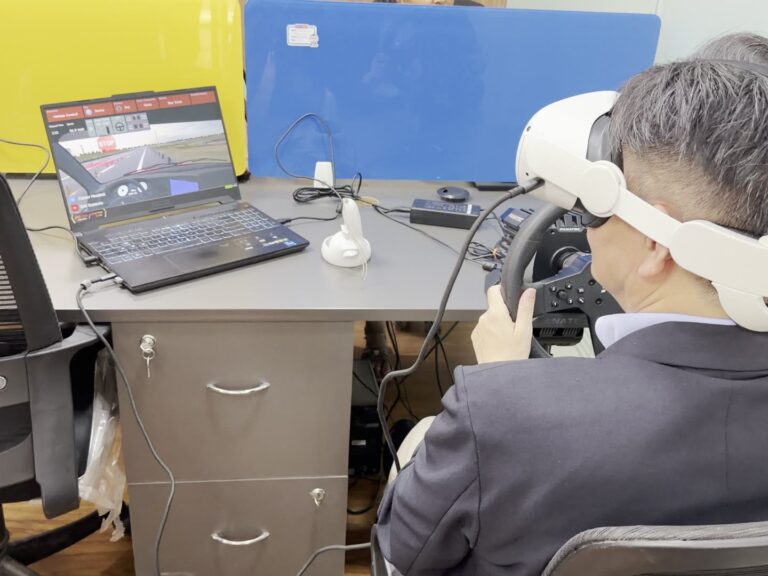
Driver & Equipment Training · Aug 2026
Before They Operate the Real Machine: How VR Simulation Is Changing Driver and Equipment Training
A driver can spend years on the road and never experience a tyre blowout at highway speed. A mining operator…
Read article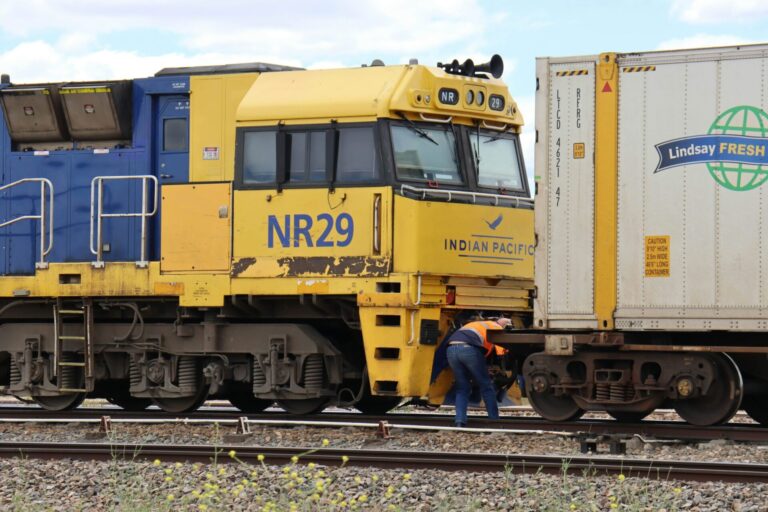
Railways Safety Training · May 2026
Why Traditional Railway Safety Training Is Failing Workers Near Active Tracks
Every year, railway workers face serious injuries and near-miss incidents while working near active tracks. And in many cases, the…
Read article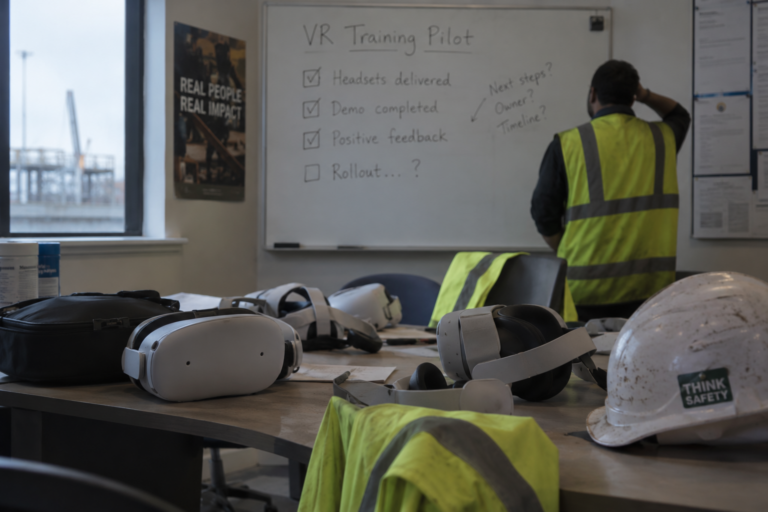
Construction · Sep 2026
Your VR Safety Training Pilot Won’t Fail Because of the VR
Seven reasons enterprise XR safety rollouts stall after the pilot, and what to fix before you buy a single headset.…
Read articleYour next step
Where does your operation need better preparation?
Tell us the role, the site and what your people need to get right. We will show you what can be trained in VR and what a sensible first pilot could look like.