

VR training / Healthcare & Nursing Education
More room to practice. Before real patient care.
Nursing VR training built around patient scenarios, clinical reasoning and communication. Create repeatable learning moments with space for educator-led reflection.
For nursing colleges, simulation centers and hospital educators
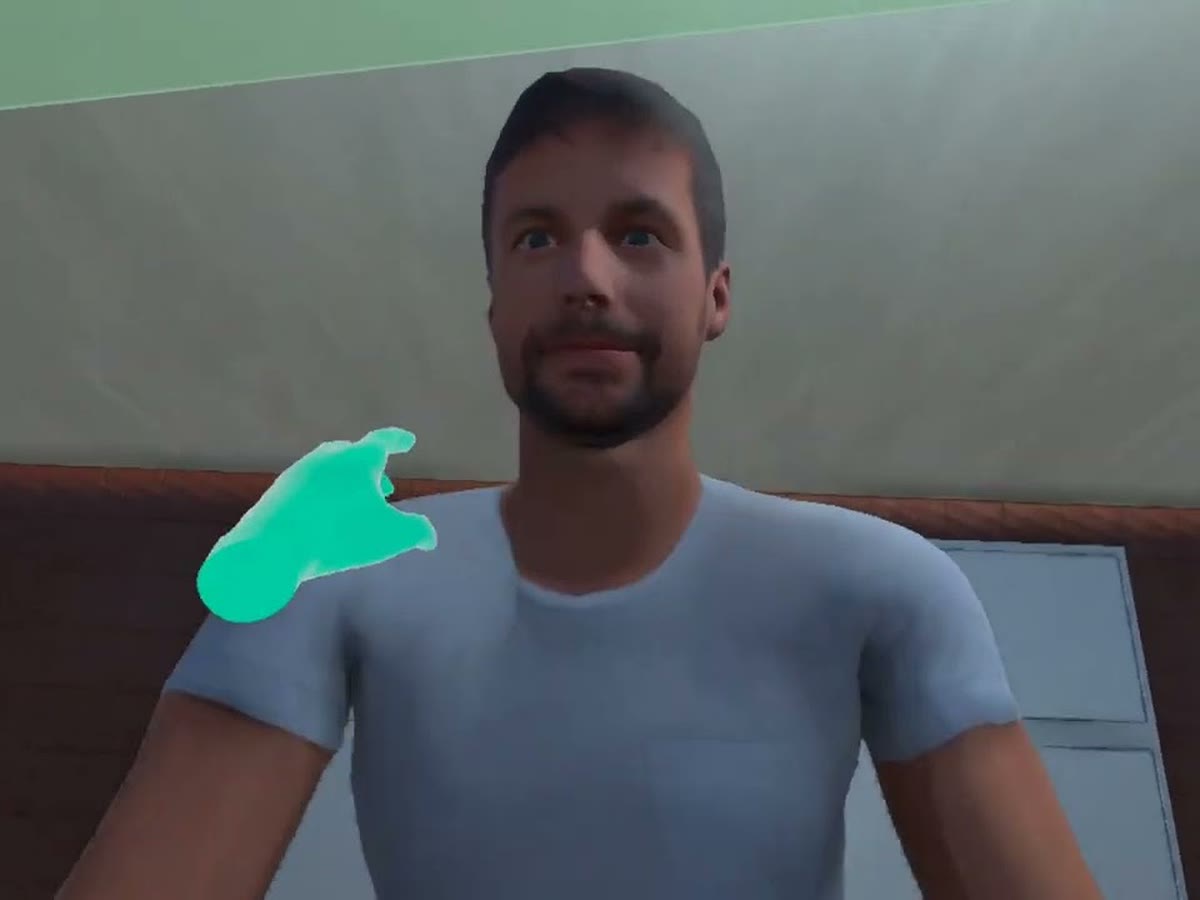
01 / The problem
Every learner needs practice. Not every encounter can wait.
- 01
Uneven clinical exposure
Learners do not all encounter the same situations during placements.
- 02
Limited simulation time
Educators need to balance equipment access, facilitation and debriefing.
- 03
Knowing versus communicating
Explaining a decision to a worried patient is a skill that needs its own practice.
02 / See it work
See the work. Then picture your team.
Explore relevant project samples before discussing your own training requirements.
Also on YouTube: Bleeding control and shock management. A project demo focused on emergency-care training. The nursing modules are separate products. Project for EMS University.
The demo above is a working HapzXR project sample. The scenarios below illustrate how the training can be adapted to different roles and procedures.
03 / Try the scenarios
The situations that matter. Space to practice them.
Pick a situation. Each one shows where the learner starts, what they practice and what the trainer gets back.
Patient assessment
You're here
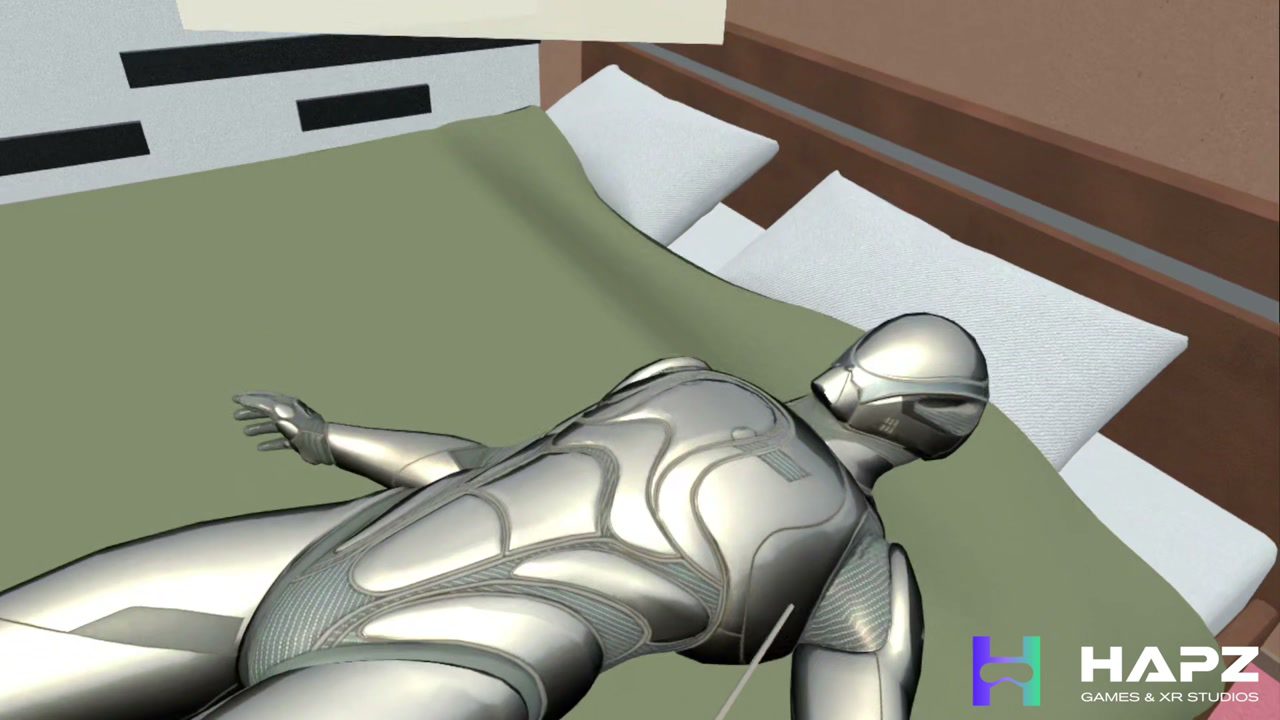
A simulated patient presents with observations that need a structured assessment.
Learner practices
Practice gathering information, prioritizing findings and communicating them to the supervising team.
Trainer sees
Debrief the reasoning and observations with a clinical educator.
Patient communication
You're here
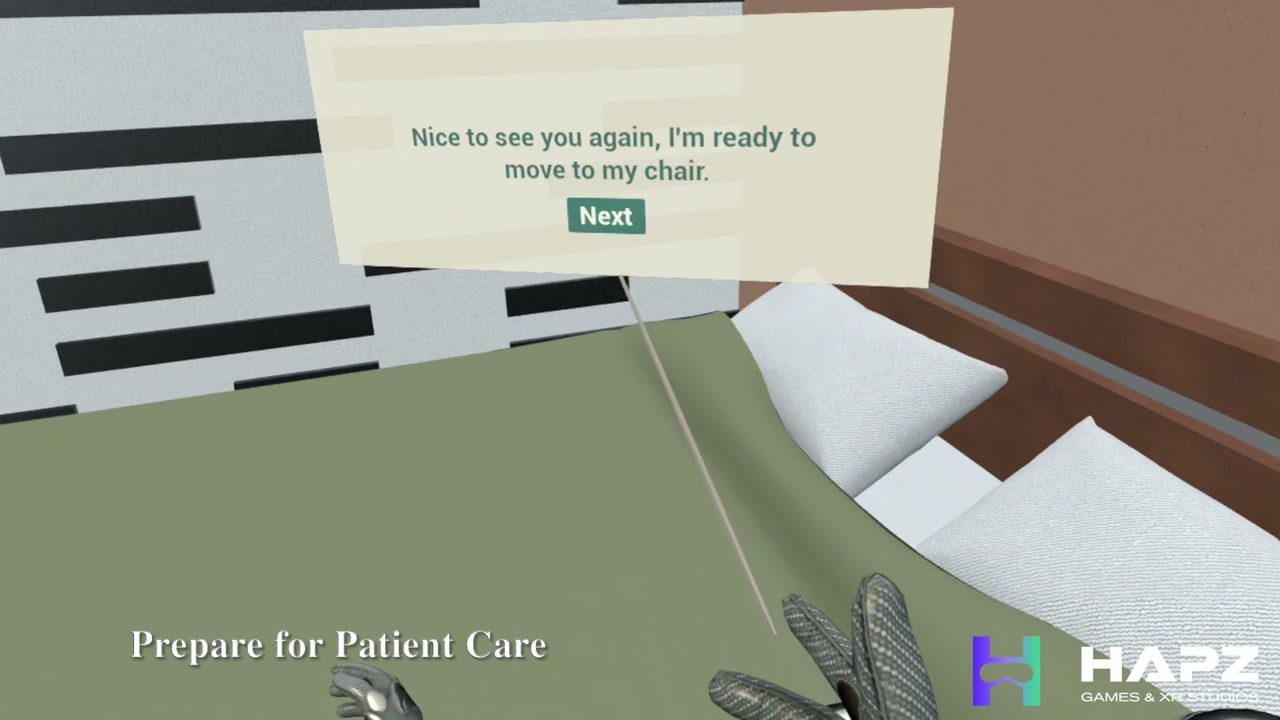
A worried patient needs an explanation of the next step in their care.
Learner practices
Rehearse an understandable explanation, respond empathetically and check understanding.
Trainer sees
Review clarity, listening and escalation within the learner role.
Recognize and escalate
You're here
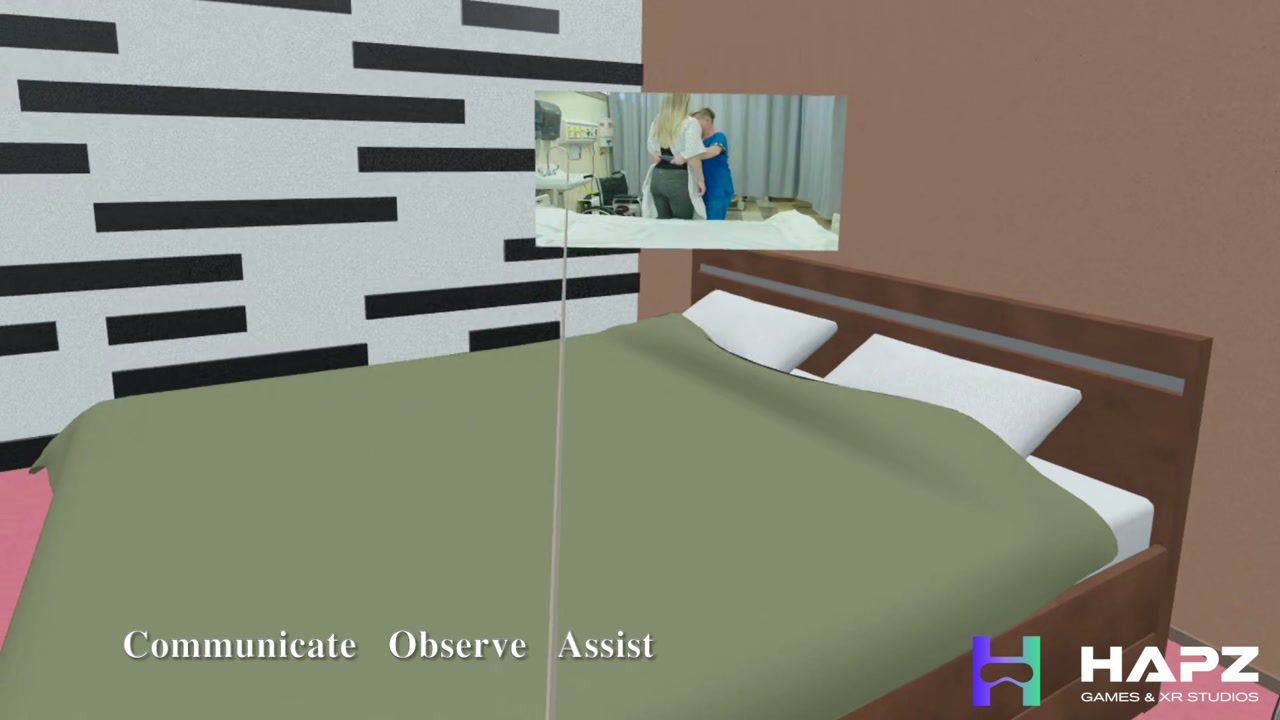
A patient scenario changes and the learner needs to recognize the limits of their role.
Learner practices
Identify the change and practice a structured handover using educator-approved content.
Trainer sees
Discuss what was noticed, what was communicated and what needs more practice.
Scenarios are illustrative. Final scope and procedures are agreed with your team.
04 / Where to start
Find your starting point.
Nursing Clinical Skills VR Training
VR nursing training for patient assessment, medication workflow, escalation, documentation, and practical bedside clinical skills.
View the moduleNeed more?
AI + VR Patient Communication Simulator
AI + VR healthcare communication training for patient education, de-escalation, empathy, difficult conversations, and bedside confidence.
05 / What we have built
What we have built so far.
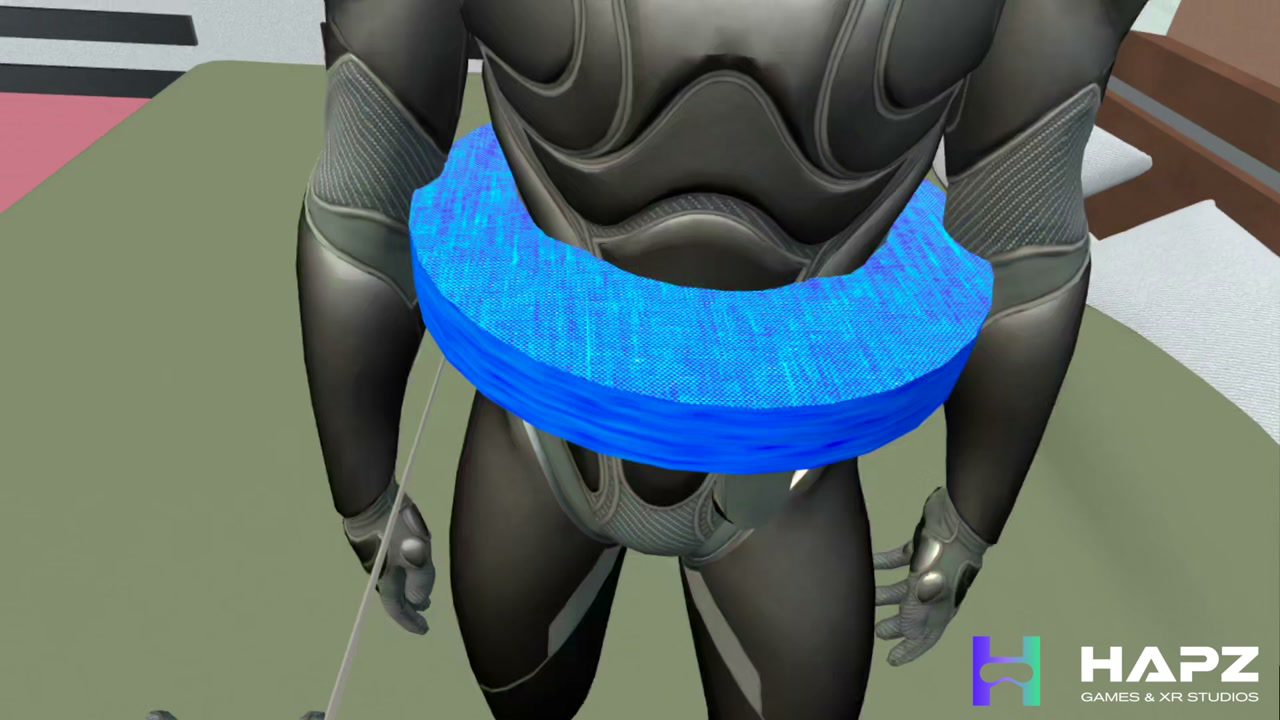
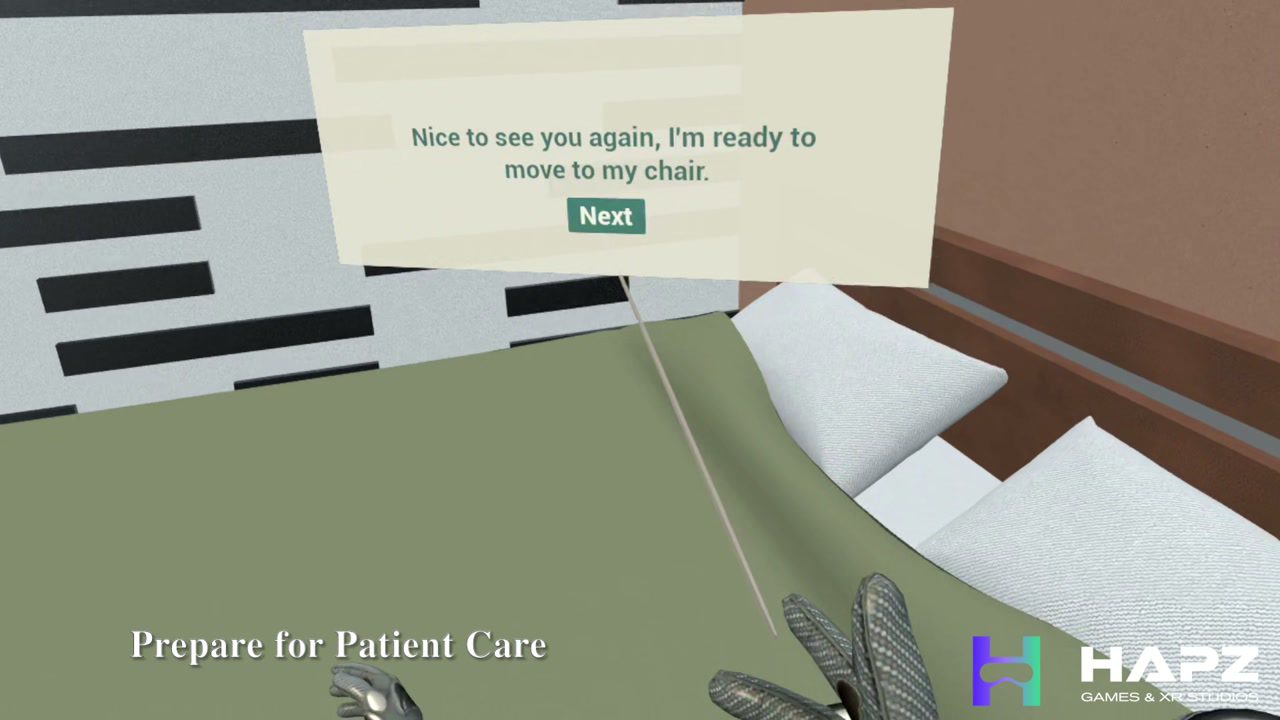
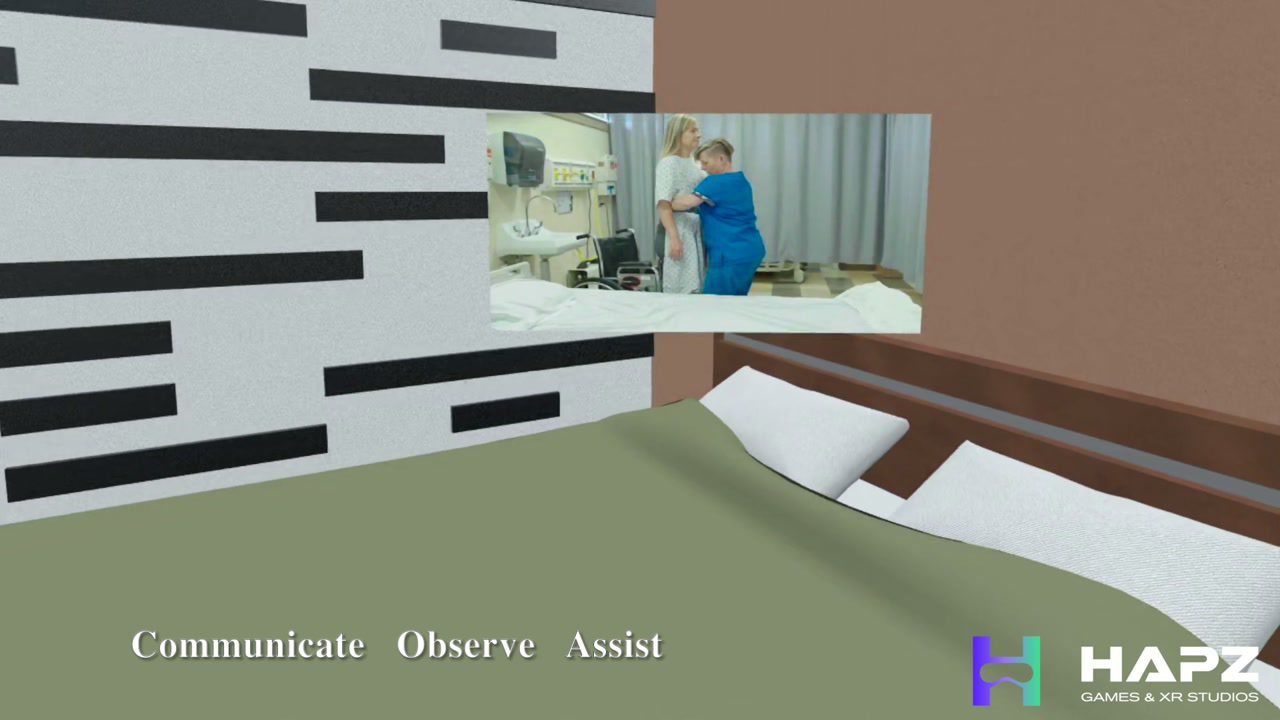
The patient-care build in the cut above is our own: hand hygiene, a safe bed-to-wheelchair transfer with a belt, and talking to the patient before and after. The bleeding-control and shock module linked under the video was built for EMS University. Neither replaces your simulation center; both are meant to give learners more repetitions before they get there.
Who is behind this
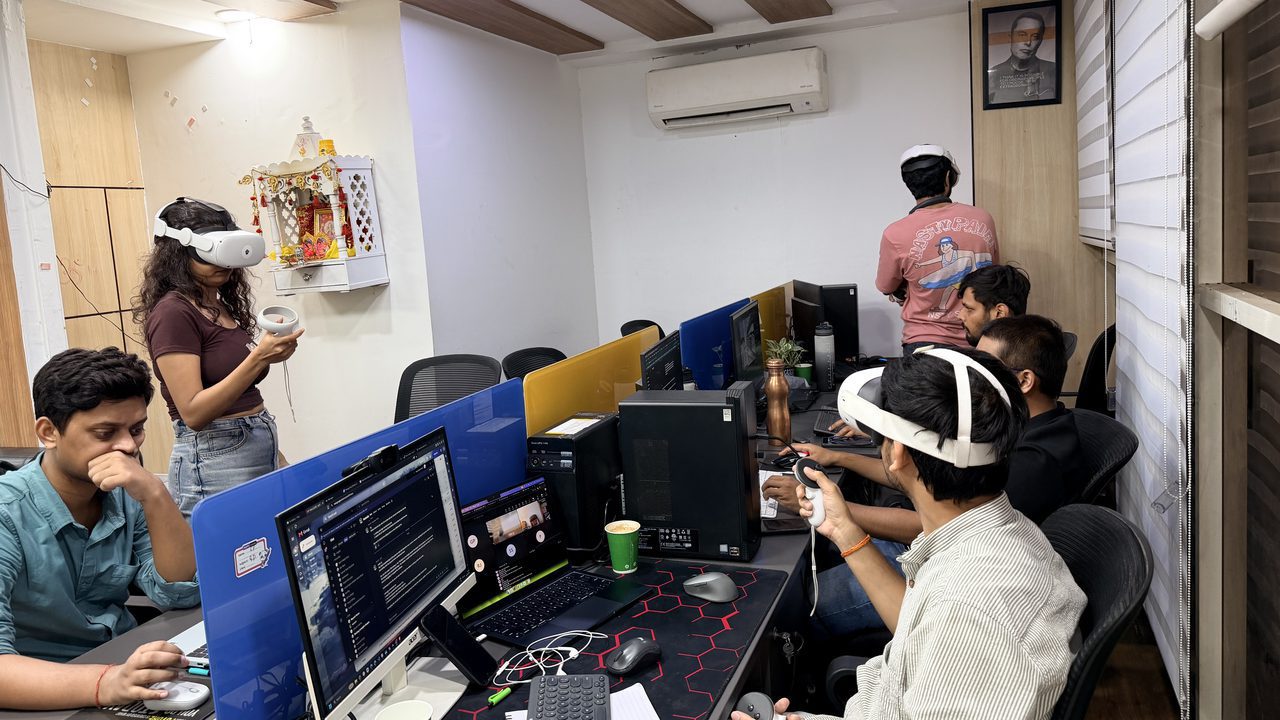
Built with clinical educators, not around them.
Designed with clinical educators, and reviewed with yours before any learner sees it.
How a pilot works
From your procedure to a working pilot.
- 1
Give us the task
Roles, procedures, site information and what people need to get right.
- 2
We adapt the training
Scenario, environment, assessment and reporting.
- 3
Run it with a small group
Review what happened before deciding whether to scale.
VR supports practice and assessment. It does not replace required qualifications, supervised practical training or your site-specific safety procedures.
Does VR replace placements or clinical supervision?
No. This is a supplementary learning approach. Your educators and relevant regulator determine its appropriate role in the curriculum. Clinical content and any AI-supported dialogue require qualified review.
Can you adapt training to our procedures and locations?
We can discuss adapting scenarios to your approved procedures, terminology, learner roles and environment. Your subject-matter experts review the content; the extent of customization is agreed before development.
What equipment, time and budget will we need?
These depend on the selected module, number of learners, headset setup and customization. Share your requirements and we will scope the hardware, delivery schedule and commercial proposal. We do not assume one deployment model fits every team.
How should we evaluate a pilot?
Agree on success measures before the pilot: decision accuracy, critical steps missed, learner throughput and feedback from instructors. Compare these with your current training approach rather than relying only on learner satisfaction.
AI&VR · Jun 2026
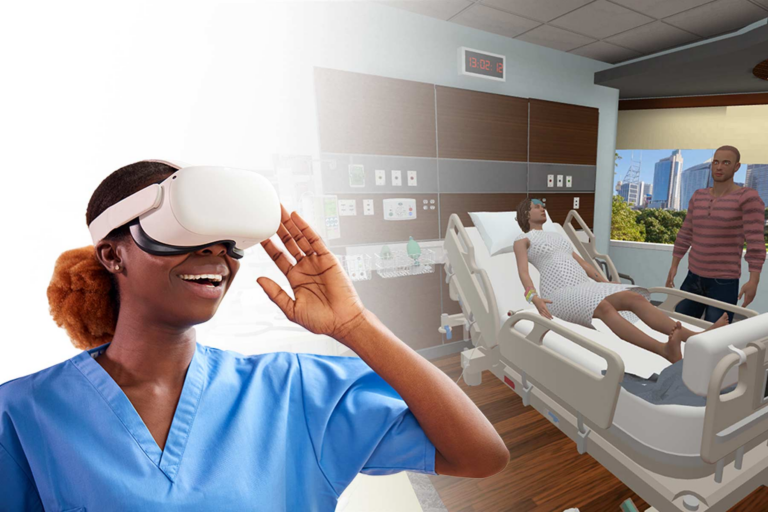
Can AI-Powered Virtual Patients Help Solve the Nursing Training Crisis?
The global healthcare industry is facing a challenge that extends far beyond staffing numbers. Hospitals, nursing schools, and healthcare organizations…
Read article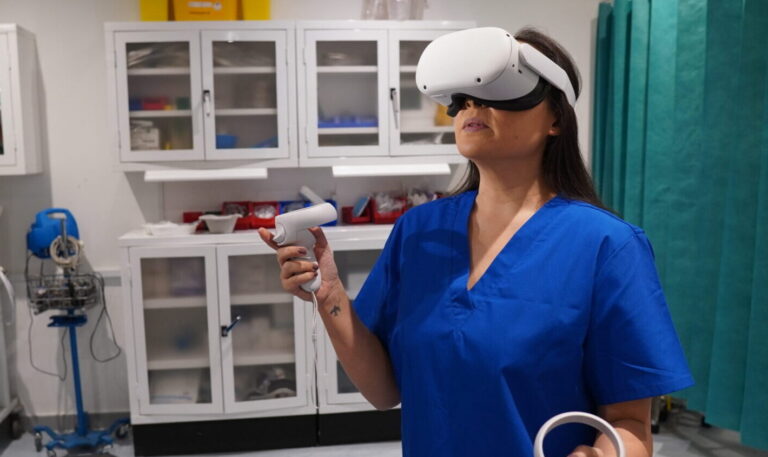
Education · Mar 2026
The Nurse Shortage Crisis: How VR Training is Revolutionizing Healthcare Education and Saving Lives
Imagine this: You go to the hospital because you are sick. But the nurse who should help you is too…
Read articleMedicine · Aug 2024
Virtual Reality in Medicine: Transforming Healthcare
Virtual Reality in Medicine: Transforming Healthcare Virtual Reality (VR) technology is revolutionizing medicine, offering innovative solutions for surgical training, patient…
Read articleYour next step
What do your learners need more time to practice?
Tell us the role, the site and what your people need to get right. We will show you what can be trained in VR and what a sensible first pilot could look like.