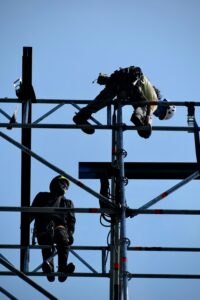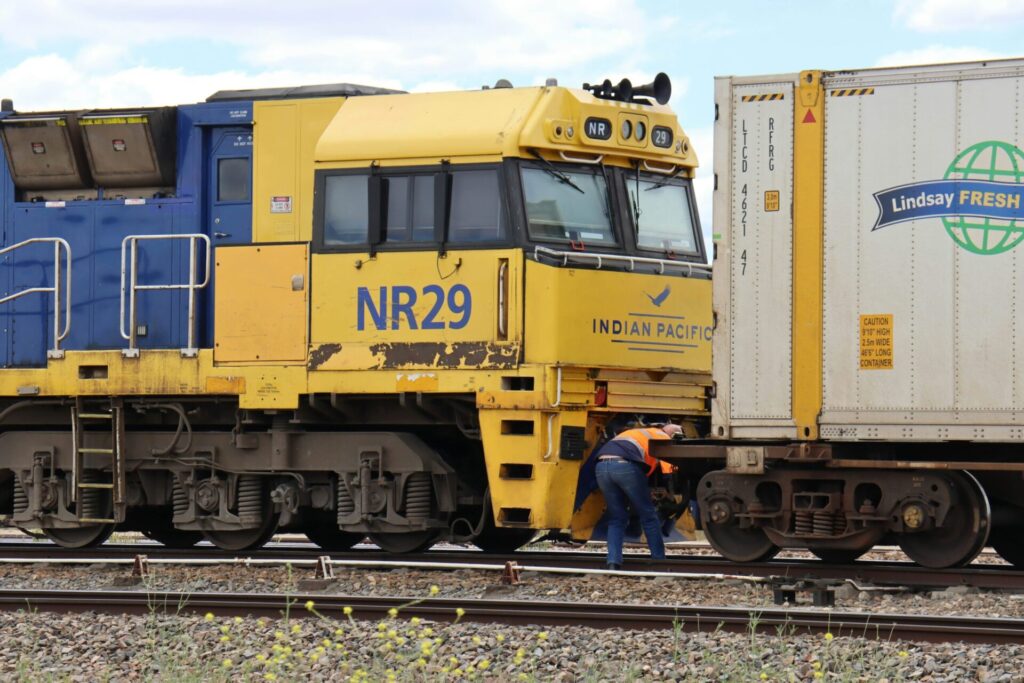
Every year, railway workers face serious injuries and near-miss incidents while working near active tracks.
And in many cases, the issue is not a lack of safety rules.
The real problem is that workers are expected to react correctly in dangerous environments they have never realistically experienced during training.
For railway companies, contractors, maintenance teams, and infrastructure operators, this creates a major challenge:
How do you prepare workers for high-risk railway environments without exposing them to actual danger?
This is one of the reasons many companies are now exploring VR railway safety training as a safer and more effective alternative to traditional methods.
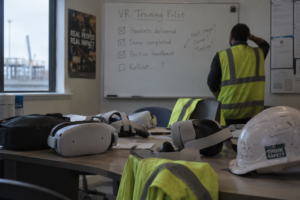
At HapzXR, we recently worked on a virtual reality training solution focused on working near railway tracks, helping workers experience real-world hazards before entering live railway environments.
But before talking about the solution, it is important to understand the actual problem companies are dealing with.
The Biggest Safety Problems Workers Face Near Railway Tracks
Working near rail infrastructure is very different from classroom learning.
Workers must constantly manage:
- Moving trains
- Blind spots
- Noise distractions
- Heavy equipment
- Communication delays
- Restricted movement areas
- Emergency response situations
- Unsafe crossing behavior
Even experienced workers can lose situational awareness under pressure.
For new workers, the risk becomes even higher because many have never physically experienced an active railway environment before their first assignment.
This is where traditional railway safety training often falls short.
Why Classroom-Based Railway Training Is No Longer Enough
Most railway safety training still relies heavily on:
- PowerPoint presentations
- Videos
- Safety manuals
- Toolbox talks
- Classroom sessions
These methods help explain procedures, but they do not recreate real pressure or real-world environmental awareness.
A worker may understand a safety rule in theory but still fail to react properly during an actual high-risk situation.
That gap between “knowing” and “experiencing” is where many incidents happen.
Live practical drills help, but they are expensive, difficult to organize, and often limited by operational safety restrictions.
Companies also cannot repeatedly expose workers to dangerous situations just for training purposes.
The Cost of Poor Railway Safety Training
For railway and infrastructure companies, safety incidents create much bigger problems than temporary operational delays.
A single mistake near active tracks can lead to:
- Serious injuries or fatalities
- Project shutdowns
- Regulatory penalties
- Insurance costs
- Legal liability
- Equipment damage
- Workforce shortages
- Reputation loss
At the same time, companies are under pressure to onboard workers faster while maintaining strict compliance standards.
This is why industries like rail, construction, mining, and oil & gas are increasingly adopting immersive VR safety training.
How VR Training Helps Railway Workers Prepare for Real Situations
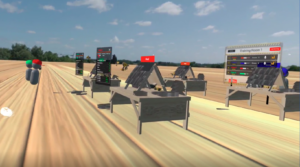
Unlike traditional training, VR places workers inside a realistic railway environment where they actively interact with hazards and procedures.
Instead of watching a scenario, workers experience it.
For our railway track safety training project, we developed immersive simulations where workers practiced:
- Safe movement near active tracks
- Hazard identification
- PPE compliance
- Emergency response procedures
- Safe crossing protocols
- Communication awareness
- Equipment handling near railway lines
Workers could make decisions inside the simulation and immediately understand the consequences of unsafe behavior.
This type of immersive learning improves both attention and memory retention because the training feels real.
Benefits of VR Railway Safety Training
One reason companies are investing in VR training is because it solves multiple operational problems at once.
Safer Practical Training
Workers can experience dangerous situations without real-world exposure.
Better Hazard Awareness
Immersive environments improve situational awareness and decision-making.
Faster Worker Readiness
New workers gain confidence before entering live railway sites.
Reduced Training Costs
Companies can repeat training scenarios without large physical drill setup costs.
Standardized Training
Every worker receives the same quality of safety instruction.
Improved Engagement
Workers stay more focused compared to traditional classroom sessions.
Why More Railway Companies Are Moving Toward VR Safety Training
Railway operations are becoming more complex, while safety expectations continue to increase.
Companies need training systems that are:
- Scalable
- Repeatable
- Measurable
- Safer
- More engaging
- Operationally efficient
VR training is helping bridge the gap between compliance training and real-world preparedness.
Instead of only teaching workers what to do, immersive training helps them practice how to react.
And in high-risk environments like railway operations, that difference matters.
Building Safer Railway Work Environments with VR
At HapzXR, we work with companies to create immersive training solutions for high-risk industries including railway, construction, manufacturing, healthcare, and industrial operations.
Our focus is not just creating simulations.
It is helping companies reduce risk, improve workforce preparedness, and create safer operational environments through immersive learning technology.
Because when workers are better prepared before entering dangerous environments, everyone benefits.