How Metro Contractors Use VR Training to Train Workers Faster
Discover how metro and infrastructure contractors are using VR training for working at height, ladders, scaffolding, man basket operations and confined space training to improve safety and speed up worker onboarding.
Every New Construction Project Starts with the Same Challenge
When a new metro, railway, or infrastructure project begins, contractors often have to onboard dozens or even hundreds of workers within a short period.
Each worker must understand the site’s safety procedures before stepping onto the job site.
The challenge is that every project is different.
A worker who has spent years on one construction site may still be unfamiliar with another site’s hazards, access routes, equipment, or work procedures.
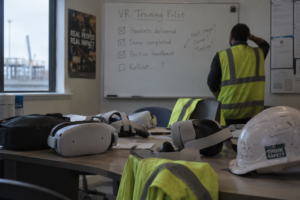
Traditional safety induction usually includes classroom presentations, toolbox talks, printed manuals, and occasionally a live demonstration. While these methods are necessary, they often leave very little room for workers to actually experience the risks before they face them on site.
This is one of the reasons many contractors are now adding Virtual Reality (VR) training to their safety programs.
Moving Beyond Classroom Safety Training
Construction safety is not just about remembering rules.
It is about making the right decision when standing 20 metres above the ground, working near live electrical systems, or operating inside a confined space.
These situations cannot always be recreated safely during classroom sessions.
VR allows workers to practise these scenarios in a controlled environment where mistakes become learning opportunities instead of accidents.
Workers can repeat procedures multiple times until they become familiar with the correct way of working.
Where Contractors Are Using VR Training
At HapzXR, we have worked on VR safety training solutions across multiple high-risk construction activities.
Below are some of the areas where VR has proven particularly valuable.
Working at Height
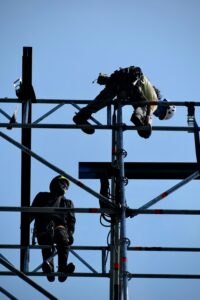
Falls remain one of the leading causes of serious injuries in the construction industry.
Through VR training, workers can practise:
- Identifying fall hazards
- Selecting appropriate PPE
- Using safety harnesses correctly
- Following safe access procedures
- Recognising unsafe work conditions
Instead of simply watching a presentation, workers experience realistic situations that require them to make decisions.
Ladder Safety Training
Ladders appear simple, but improper use continues to cause injuries on construction sites.
VR simulations help workers practise:
- Pre-use ladder inspection
- Correct ladder positioning
- Maintaining three points of contact
- Safe climbing techniques
- Common mistakes that lead to falls
Workers can repeat the exercise until the correct behaviour becomes second nature.
Scaffolding Safety
Scaffolding introduces multiple risks, especially on large infrastructure projects.
VR allows workers to understand:
- Safe access and exit
- Platform inspection
- Load limitations
- Guardrail requirements
- Hazard identification
Instead of explaining these concepts through diagrams, workers interact with realistic scaffold environments.
Man Basket Operations
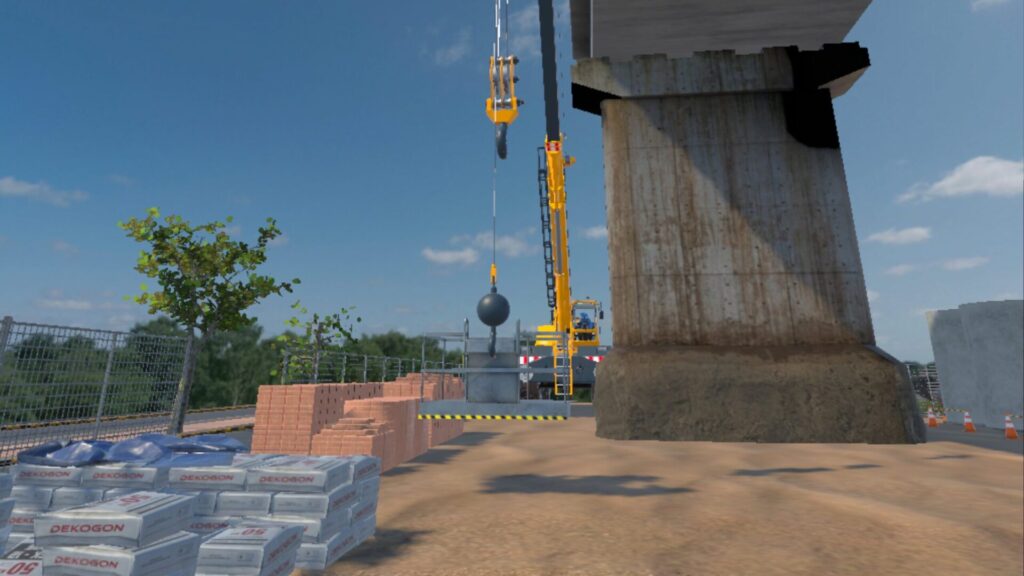
Man basket operations require coordination between operators, supervisors, and workers.
A VR simulation can include:
- Equipment inspection
- Communication procedures
- Safe entry and exit
- Emergency response
- Hazard recognition during elevated work
Because these activities involve expensive equipment and real risks, VR provides a safe environment for practice before actual deployment.
Working Near Live Tracks
Metro and railway construction projects present additional hazards due to moving trains and high-voltage electrical systems.
Workers can learn:
- Safe approach distances
- Permit requirements
- Site-specific hazards
- Emergency procedures
- Situational awareness
Training in a virtual environment helps workers understand these risks before entering an active work zone.
Confined Space Entry
Confined spaces demand strict compliance with safety procedures.
VR training enables workers to practise:
- Permit-to-work procedures
- Gas testing
- Ventilation checks
- PPE selection
- Emergency evacuation
These are scenarios that are difficult and costly to recreate repeatedly during traditional training.
One Benefit Contractors Often Overlook
Many people assume the biggest benefit of VR training is immersion.
In reality, one of the biggest advantages is consistency.
Every worker receives the same training experience.
Every worker follows the same sequence.
Every worker is assessed against the same safety standards.
This helps reduce variations in training quality across different supervisors, project locations, and subcontractors.
Faster Worker Onboarding
Construction projects frequently face tight mobilisation schedules.
Imagine onboarding 100 new workers before a major project begins.
With conventional methods, experienced supervisors may need to conduct multiple demonstrations over several days.
VR does not replace the supervisor, but it allows practical learning to happen in parallel.
Workers can complete guided VR sessions while supervisors focus on discussions, site-specific instructions, and competency assessments.
This can significantly improve the efficiency of the onboarding process, particularly for organisations managing large workforces across multiple projects.
VR Is Not Replacing Traditional Training
An important point is that VR should not be viewed as a replacement for classroom training, toolbox talks, or practical site demonstrations.
Instead, it complements existing safety programs.
Workers arrive on site with a stronger understanding of procedures because they have already experienced realistic work situations virtually.
The combination of classroom instruction, practical demonstrations, and immersive VR creates a more comprehensive learning experience.
Looking Ahead
As construction projects become larger and safety expectations continue to rise, contractors are looking for ways to improve both training quality and operational efficiency.
VR training is increasingly becoming part of that strategy.
It allows organisations to expose workers to hazardous situations without exposing them to actual danger.
More importantly, it gives workers the opportunity to practise, make mistakes, learn, and build confidence before entering the real work environment.
How HapzXR Supports Construction Safety Training
At HapzXR, we develop custom Virtual Reality training simulations for construction, metro, railway, infrastructure, and industrial projects.
Our solutions include training modules for:
- Working at Height
- Ladder Safety
- Scaffolding Safety
- Man Basket Operations
- Confined Space Entry
- Working Near Live Tracks
- Custom site-specific safety procedures
Every organisation has different workflows, equipment, and operating procedures. Rather than offering generic content, we work with clients to build VR training experiences that reflect their actual work environments and safety requirements.
If your organisation is exploring VR training for construction or infrastructure projects, we’d be happy to discuss how immersive learning can support your existing safety programme.
About HapzXR
HapzXR is an India-based XR development company specialising in Virtual Reality training solutions for construction, manufacturing, healthcare, transportation, and industrial safety. We design immersive training experiences that help organisations improve learning outcomes while reducing training risks for high-hazard operations.