If you talk to people inside the automobile industry today, one thing becomes very clear very quickly.
Margins are tighter. Customer expectations are higher. Vehicle technology is getting more complicated every year.
And mistakes are becoming expensive.
Not just manufacturing mistakes. Sales mistakes. Service mistakes. Training mistakes. Communication mistakes.
This is one of the biggest reasons automobile companies like Hyundai, Ford, BMW, Volkswagen and others have started investing heavily into VR (Virtual Reality) and immersive technologies.
From the outside, many people still think VR is mostly for gaming.
Inside the automotive industry, it is becoming a serious business tool.
And honestly, after working with automobile companies and industrial teams in Korea and Germany, we have seen why companies are taking it seriously.
The biggest reason?
VR helps companies reduce errors before they become expensive real-world problems.
The Real Problems Automobile Companies Face Today
Most blogs talk about VR like it’s some futuristic innovation.
But companies are not spending money on VR because it looks cool.
They are investing because they are trying to solve very practical operational problems.
Let’s talk about some of the real ones.
1. Service Errors Are Extremely Costly
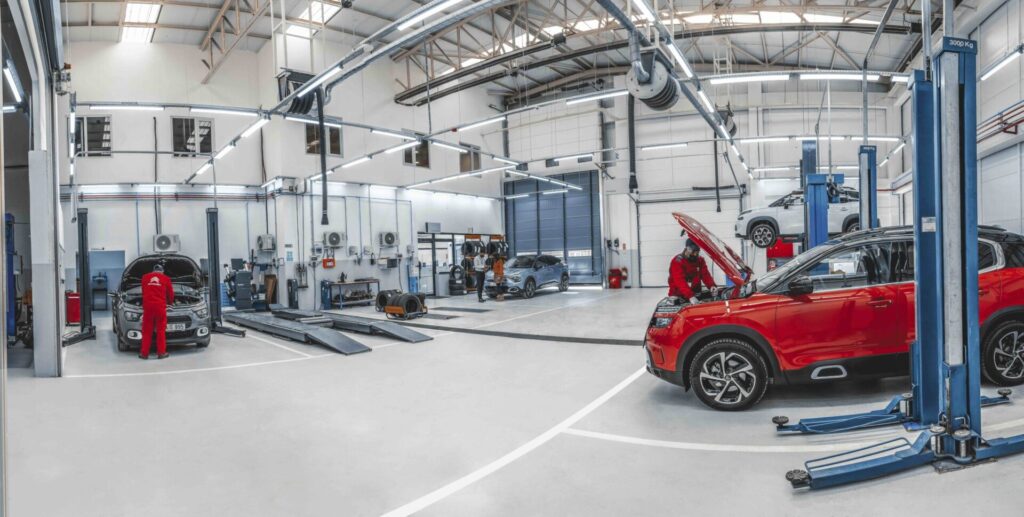
Modern vehicles are no longer simple mechanical systems.
Today’s vehicles include:
- ADAS systems
- EV battery systems
- complex wiring
- sensors
- digital dashboards
- software-heavy diagnostics
Training service technicians on these systems is becoming difficult and expensive.
A small servicing mistake can lead to:
- warranty claims
- customer dissatisfaction
- vehicle recalls
- safety risks
- repeated service visits
Traditional training methods are struggling to keep up.
Reading manuals or watching videos is often not enough when technicians need hands-on understanding.
This is where VR starts making real business sense.
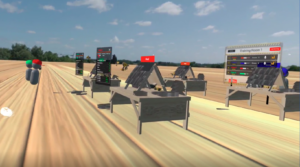
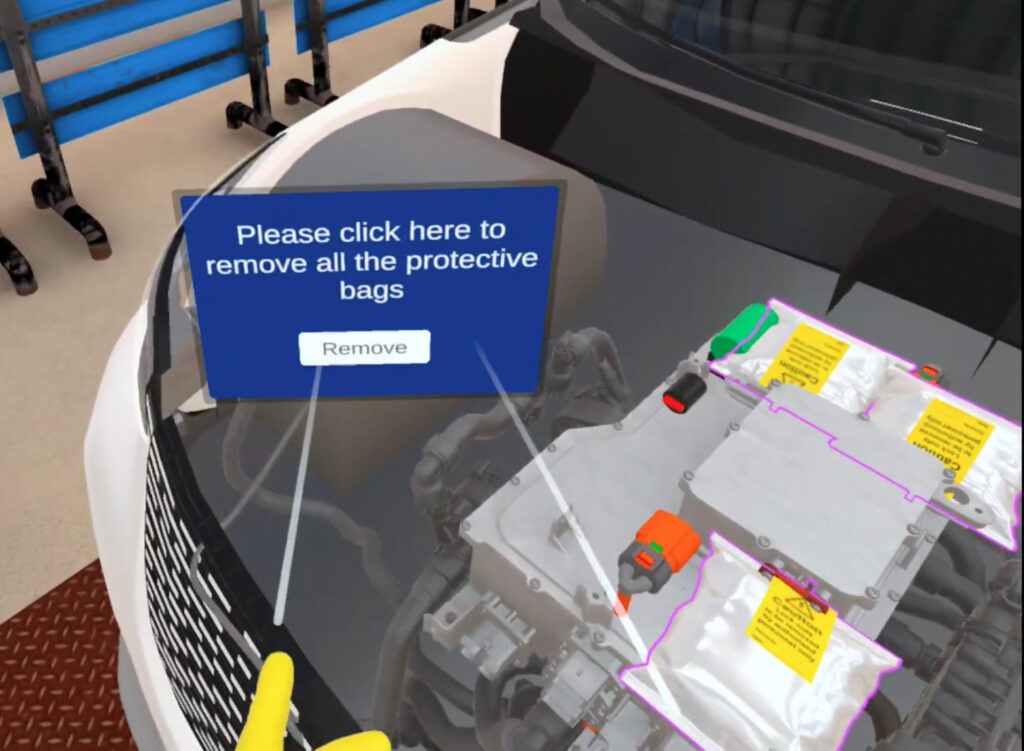
Instead of learning only from documentation, technicians can practice procedures inside a virtual environment before touching the actual vehicle.
They can:
- disassemble components
- practice repair workflows
- understand internal systems
- learn safety procedures
- repeat training without damaging real equipment
And they can repeat the process as many times as needed.
That reduces human error significantly.
Hyundai and Ford Are Already Using VR in Different Ways
This is not theoretical anymore.
Large automotive brands are already using VR across training, design, manufacturing and customer experience.
Hyundai
Hyundai has experimented with VR showrooms and immersive customer experiences to help buyers explore vehicles before stepping into dealerships.
But beyond sales, automotive companies in Korea have also been exploring immersive training environments for technical education and service operations.
This becomes especially important for EV servicing, where safety procedures matter a lot.
Instead of risking mistakes on expensive hardware, teams can simulate scenarios virtually.
That saves both time and cost.
Ford
Ford has publicly discussed using VR for design collaboration and engineering workflows.
Why?
Because building physical prototypes repeatedly is expensive.
When teams can review vehicle interiors, ergonomics, assembly layouts or service accessibility in VR first, they can catch issues earlier.
And in automotive manufacturing, catching a problem early can save millions later.
Ford has also explored VR and mixed reality for employee training and factory workflow improvements.
Again, the goal is not “innovation for marketing”.
It is operational efficiency.
VR Is Also Changing Automotive Sales
This is another area people underestimate.
Buying behavior has changed.
Customers now expect digital experiences before visiting dealerships.
But maintaining physical inventory for every vehicle variation is almost impossible.
Different trims, colors, accessories, interiors, configurations — it becomes costly very quickly.
VR and immersive visualization solve this problem.
Customers can explore:
- vehicle interiors
- dashboard interaction
- color options
- feature packages
- driving simulations
- safety features
without requiring every physical model to exist at the dealership.
This helps in two major ways:
Better Customer Confidence
Customers understand the product better before purchase.
That reduces confusion and improves buying confidence.
Reduced Inventory and Demo Costs
Dealerships do not need to maintain as many physical demo configurations.
That saves money.
Especially for premium or EV models where inventory costs are high.
One Area People Rarely Talk About: Training Consistency
This is actually one of the biggest hidden problems in automotive service networks.
A global automobile company may have:
- hundreds of dealerships
- multiple service centers
- thousands of technicians
Keeping training quality consistent across locations is difficult.
Some technicians learn faster.
Some trainers explain things differently.
Some locations have better equipment than others.
VR creates standardized training environments.
Every technician can learn the exact same workflow in the exact same process.
That consistency matters a lot for global automotive brands.
Especially when dealing with EV safety, advanced diagnostics and complex servicing procedures.
Why Germany and Korea Are Moving Fast in This Area
From our experience working with industrial and automotive-focused teams in Korea and Germany, the focus is usually very practical.
They are not asking:
“How do we use VR because it is trending?”
They are asking:
- How do we reduce servicing mistakes?
- How do we train faster?
- How do we reduce downtime?
- How do we improve technician confidence?
- How do we reduce prototype cost?
- How do we improve customer understanding?
That mindset changes the entire conversation.
And honestly, that is where VR becomes valuable.
Not as entertainment.
But as an operational tool.
The ROI Conversation Is Becoming Easier
A few years ago, many companies saw VR as experimental.
Now the ROI is becoming easier to measure.
Companies are seeing benefits like:
- reduced training errors
- lower equipment damage
- fewer repeat servicing issues
- faster onboarding
- reduced prototype costs
- improved customer engagement
- shorter learning cycles
And once companies start seeing savings in one department, adoption usually spreads to others.
Training leads to service.
Service leads to manufacturing.
Manufacturing leads to sales visualization.
That is how immersive technology is slowly becoming part of the automotive ecosystem.
Final Thoughts
The automobile industry is under pressure from every side right now.
EV transition.
Complex technology.
Higher customer expectations.
Faster product cycles.
Skilled labor shortages.
VR is not solving everything.
But it is helping companies reduce costly mistakes before they happen.
And that is exactly why major automotive brands are continuing to invest in it quietly.
Not because it looks futuristic.
Because reducing errors saves money.
And in the automobile industry, even small operational improvements can create massive long-term impact.