Event safety does not fail only because of poor planning.
Many times, incidents happen because the people working on the ground do not fully understand the venue before the event begins.
For large events, this is a real problem.
Crew members need to know where guests will enter, where crowds may gather, where emergency exits are located, how equipment should move, where backstage access is allowed, and what to do if something goes wrong.
But in many events, temporary staff, volunteers, vendors, security teams, and production crews get very limited time to understand the venue.
Some may visit the venue only once.
Some may see it for the first time on event day.
This can create confusion, delays, wrong movement, blocked access routes, crowd control issues, and safety risks.
This is where VR apps for event crew training can make a major difference.
The Problem: Event Teams Often Learn the Venue Too Late
Event venues can be complex, especially for concerts, exhibitions, sports events, conferences, festivals, weddings, and large public gatherings.
Crew members may need to understand:
- Entry and exit points
- Emergency exits
- Guest movement routes
- Stage and backstage areas
- VIP access routes
- Security checkpoints
- Vendor zones
- Medical support points
- Fire safety equipment
- Restricted areas
- Loading and unloading routes
- Equipment storage zones
During a live event, there is no time for confusion.
If a crew member does not know the nearest emergency exit, medical point, or correct access route, a small issue can quickly become a serious incident.
Why Traditional Venue Briefings Are Not Enough
Most event teams still depend on floor plans, PDF documents, WhatsApp instructions, photos, videos, or short physical walkthroughs.
These methods are useful, but they have clear limitations.
Floor Plans Are Difficult to Understand
Not every crew member can read technical venue layouts properly.
A floor plan may show emergency exits and access routes, but it does not help people feel the actual space.
Walkthroughs Are Hard to Schedule
Physical walkthroughs require everyone to be present at the same time.
This is difficult when teams include freelancers, vendors, security staff, temporary workers, and last-minute crew members.
Videos Are Passive
A venue video can show the space, but the crew cannot explore freely.
They cannot test whether they remember where key areas are.
They also cannot practice decision-making.
Last-Minute Briefings Create Risk
Many event briefings happen close to the event date.
By that time, the team is already dealing with setup pressure, client changes, vendor coordination, technical checks, and guest management.
Important safety details can easily be missed.
How VR Apps Can Train Event Crews Before the Event
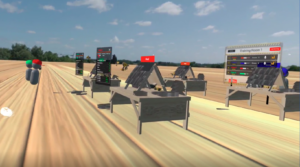
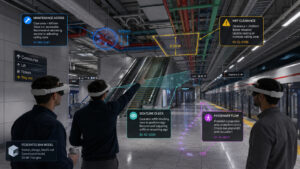
A VR venue training app allows crew members to enter a virtual version of the event venue before the actual event.
They can explore the venue using a VR headset, desktop application, or immersive mobile experience.
Instead of only looking at a map, the crew can walk through the space virtually and understand it better.
A VR app can help them learn:
- Where guests will enter
- Where queues may form
- How to reach emergency exits
- Where medical support is available
- Which routes are restricted
- Where backstage access is allowed
- How equipment should move
- Where security teams should be positioned
- How guests should be redirected during crowd movement
This gives the crew practical venue familiarity before event day.
How VR Venue Training Can Help Prevent Event Incidents
1. Better Emergency Preparedness
In an emergency, every second matters.
VR can help crew members practice how to respond to:
- Fire alarms
- Medical emergencies
- Crowd movement issues
- Blocked exits
- Power failures
- Guest injuries
- Security incidents
Instead of only being told what to do, the crew can practice the response inside a realistic virtual venue.
This improves confidence and reduces panic during real situations.
2. Improved Crowd Flow Management
Crowd movement is one of the biggest safety concerns in events.
Poor crowd flow can cause bottlenecks, long queues, pressure points, and unsafe movement.
VR apps can help event teams identify:
- High-risk crowd areas
- Congestion points
- Alternative movement routes
- Entry and exit pressure zones
- Better placement for signage and barricades
This helps teams plan crowd control more effectively before the event starts.
3. Faster Onboarding for Temporary Staff
Events often depend on temporary staff and freelancers.
These team members may not get enough time to understand the venue properly.
With VR training, new crew members can complete a guided venue walkthrough before reaching the site.
This reduces basic confusion on event day and helps them become productive faster.
4. Better Coordination Between Teams
Large events involve many teams working together.
These may include:
- Production team
- Security team
- Hospitality team
- Registration team
- Vendor team
- Technical team
- Medical team
- Client servicing team
If every team understands the same venue layout, coordination becomes much smoother.
VR creates a shared understanding of the venue before the event begins.
5. Safer Backstage and Equipment Movement
Many event incidents happen behind the scenes.
Examples include blocked access routes, cable hazards, wrong equipment movement, restricted area confusion, and poor loading coordination.
VR can train crew members on backstage routes, loading areas, equipment zones, and restricted access points.
This is especially useful for concerts, exhibitions, sports events, and large corporate events.
Real Use Cases of VR Apps in Event Training
Concerts and Music Festivals
Crew can learn stage access, artist movement routes, barricade placement, medical zones, crowd control points, and emergency exits.
Corporate Conferences
Event staff can understand registration flow, speaker rooms, breakout rooms, VIP movement, technical zones, and evacuation routes.
Exhibitions and Trade Shows
Teams can learn booth layouts, visitor routes, loading areas, vendor movement, storage zones, and safety exits.
Sports Events
Security and operations teams can understand seating sections, player areas, public routes, restricted zones, and crowd movement patterns.
Weddings and Large Social Events
Hospitality teams can learn guest flow, service routes, kitchen access, seating areas, vendor locations, and emergency points.
Benefits of VR Apps for Event Companies and Venue Operators
VR venue training can help event companies and venue owners improve planning, training, and safety.
Key benefits include:
- Faster crew onboarding
- Better venue familiarity
- Reduced event-day confusion
- Improved emergency response
- Better crowd management
- Safer equipment movement
- Stronger coordination between teams
- Lower risk of preventable incidents
- More professional event execution
For venue operators, VR venue walkthroughs can also become a value-added service for event planners, safety teams, production companies, and clients.
Why Event Businesses Should Take This Seriously
Events are becoming larger, faster, and more complex.
At the same time, many event teams work with temporary staff, tight timelines, changing layouts, and last-minute instructions.
In such situations, depending only on floor plans and verbal briefings is not enough.
VR apps give event teams a better way to prepare before the pressure of the live event begins.
They help the crew move from:
“I saw the venue layout”
to
“I understand how this venue works.”
That difference can prevent mistakes.
And in event operations, preventing mistakes is often the difference between a smooth event and a serious incident.
Conclusion
Venue familiarity is one of the most important parts of event safety.
When event crews understand the venue before the event, they can guide guests better, respond faster, coordinate smoothly, and avoid many preventable incidents.
VR apps make venue training more visual, interactive, and practical.
For event companies, venue operators, production teams, and safety managers, VR venue training can become a powerful tool to improve preparedness before the first guest enters the venue.
How HapzXR Can Help
HapzXR develops custom VR, AR, and immersive training solutions for industries where safety, coordination, and real-world preparedness matter.
We can help event companies and venue operators build VR venue training apps that allow crews to learn layouts, practice emergency response, understand crowd movement, and improve operational readiness before event day.
Planning to improve event crew training with VR? Contact HapzXR to discuss your requirements.