Manufacturing VR training is valuable because it lets plants improve workforce readiness without depending on live production time. Instead of waiting for a trainer, a machine window, or the right shift conditions, operators and technicians can rehearse complex procedures in a controlled environment before their performance affects throughput, safety, or quality.
This matters most in facilities where onboarding takes too long, process variation exists across shifts, or mistakes during learning create scrap, rework, or safety exposure. In those environments, immersive training becomes a practical operations tool.
Why Manufacturing Teams Adopt VR Training
- Faster onboarding: New operators can practice sequence-heavy work before touching the line.
- Less production disruption: Teams rehearse off-line instead of learning on active equipment.
- Better SOP consistency: Every trainee sees the same steps, quality checkpoints, and pass/fail expectations.
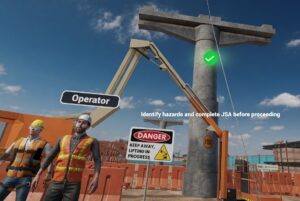
- Safer repetition: High-risk tasks like LOTO, maintenance intervention, or emergency-stop responses can be repeated without live exposure.
- Clearer readiness data: Supervisors can see missed steps, timing issues, and recurring weak points before assignment.
Where Manufacturing VR Training Helps Most
The highest-value scenarios are usually the ones where learning on the live line is expensive or disruptive. Common examples include:
- machine startup, shutdown, and changeover workflows
- assembly-line sequencing and tool handling
- lockout-tagout and energy isolation verification
- quality checkpoints and defect escalation decisions
- maintenance troubleshooting and safe intervention steps
- emergency stop, communication, and restart procedures
These are the workflows where skill training in VR produces the most operational value because the learner is not just watching content. They are executing the work.
How a Manufacturing VR Training Rollout Usually Works
A smart rollout starts with one line, one workstation, or one procedure family. The goal is not to model the whole plant immediately. The goal is to prove that immersive training can shorten time-to-competency, reduce avoidable errors, and standardize execution.
A typical pilot includes:
- a high-priority scenario such as changeover, assembly, or LOTO
- guided training, free practice, and scored assessment modes
- performance reports for instructors or supervisors
- a before-and-after comparison against existing onboarding or refresher methods
Once the pilot shows value, the same framework can expand across lines, plants, and roles. This is especially useful for manufacturers managing multi-site operations where training drift creates quality risk.
What Leaders Should Measure
Manufacturing VR training works best when it is tied to operational metrics:
- time-to-competency for operators and technicians
- scrap, rework, or defect rates during early-stage task execution
- quality escapes tied to missed procedural steps
- trainer and supervisor time consumed by onboarding
- downtime created by live training dependency
- cross-site consistency in SOP execution
Those measures help leadership see VR training as a throughput, quality, and safety lever, not just a learning initiative.
How Technology Fits In
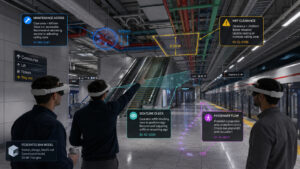
When realism matters, manufacturing teams often want training connected to real layouts, workstations, CAD geometry, or digital-twin workflows. HapzXR supports that with Unity-based interaction design and, when needed, broader spatial context through digital twin and 3D visualization pipelines. The technology matters, but the business outcome matters more: realistic practice that improves execution on the plant floor.
How HapzXR Supports Manufacturing Teams
Our Manufacturing VR Training programs are built for operators, technicians, supervisors, and quality teams that need faster readiness without compromising production. If you want to see what that looks like in practice, review our Manufacturing Assembly Line VR Training case study.
Bottom line: manufacturing VR training is most effective when it targets one high-value procedure, measures operational outcomes, and scales only after the plant has proof. If that is your priority, talk to HapzXR about a pilot mapped to your production workflow.