Enterprise VR training works best when the cost of weak training is already visible. That usually means long onboarding windows, inconsistent execution across sites, safety-critical tasks, expensive live equipment time, or low-frequency scenarios that teams rarely get to rehearse before they matter. In those situations, immersive training is not a novelty layer on top of your learning program. It becomes a more reliable way to build skill, validate readiness, and shorten the time between instruction and performance.
At HapzXR, we use enterprise VR training to convert real workflows into repeatable practice environments that teams can run before they touch live equipment, enter hazardous zones, or perform high-cost procedures. Instead of relying only on classroom theory, shadowing, or trainer availability, the organization gets a structured system for guided learning, hands-on repetition, assessment, and remediation.
What Enterprise VR Training Actually Means
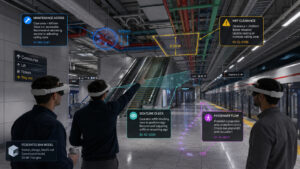
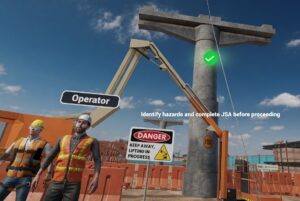
Enterprise VR training is not the same as a flashy VR demo. A strong program mirrors the real work. It uses your SOPs, decision points, hazards, quality checkpoints, and role-specific responsibilities. The training is designed so operators, technicians, supervisors, or contractors can practice the exact sequence that matters in the field.
That is why the strongest use cases usually sit inside skill training in VR rather than generic awareness content. The value comes from repetition, measurable execution, and confidence before live deployment.
Where Enterprise VR Training Creates the Strongest ROI
- Distributed onboarding: When multiple sites or shifts need the same training quality, VR reduces trainer drift and makes readiness more consistent.
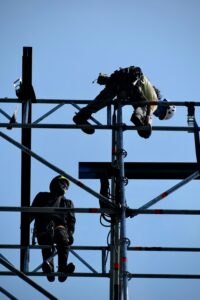
- High-risk workflows: Tasks involving permits, hazard controls, isolations, or emergency actions are better learned through realistic rehearsal than theory alone.
- Equipment-limited training: When live equipment time is scarce or expensive, VR gives learners repetition without disrupting production.
- Low-frequency, high-consequence events: Emergency response, abnormal conditions, and recovery procedures benefit from immersive repetition because teams rarely get real-world practice.
- Performance validation: Supervisors can use scoring and step-level data to see who is ready, where people struggle, and what needs reinforcement.
What a Strong Rollout Looks Like
The best enterprise VR training programs do not start with everything. They start with one workflow where poor execution is already expensive. That may be operator onboarding, a maintenance sequence, a safety-critical permit routine, or a machine setup process.
A practical rollout usually looks like this:
- Select one high-value scenario and define the business outcome you want to improve.
- Gather SOPs, SME input, plant or site references, and assessment requirements.
- Build guided, practice, and scored modes so trainees move from instruction to independent execution.
- Run a pilot cohort and compare timing, errors, confidence, and readiness against your current model.
- Refine the scenario and scale the same framework into more workflows, roles, or locations.
This is the approach we use because it creates evidence before expansion. It also prevents companies from overbuilding before they know which scenarios will produce the best operational return.
How to Measure ROI
Leadership teams usually make faster decisions when VR training is connected to operating metrics, not just engagement metrics. Useful measures include:
- time-to-competency for new hires
- supervisor time required for onboarding and sign-off
- rework, scrap, or procedure deviations during early task execution
- permit or compliance errors in high-risk workflows
- readiness scores by role, shift, or location
- travel, downtime, or live-training availability constraints
In practice, the organizations that scale fastest are the ones that treat VR training as an operational improvement initiative, not just an L&D experiment.
What to Ask a VR Training Company
- Can they model real SOP execution? The value is in your actual workflow, not a generic simulation.
- Can they score performance? Without measurable outcomes, it is hard to prove readiness or ROI.
- Can they support phased rollout? A pilot-first model is usually the right path.
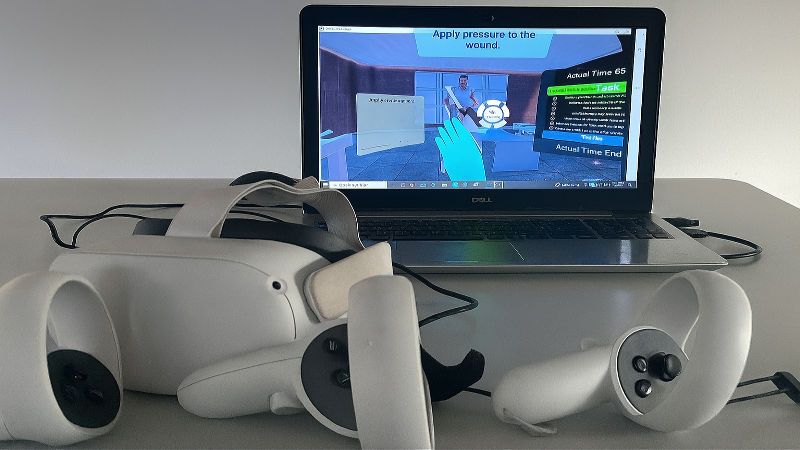
- Can they build for the hardware you will actually use? Quest, PCVR, and site realities matter.
- Can they work with industrial teams? Context matters more than novelty in enterprise XR.
How HapzXR Applies This in the Field
We usually start where the training burden is operationally painful. For example, a manufacturer may need faster operator onboarding and more consistent SOP execution across shifts. An energy operator may need better rehearsal quality for hazardous workflows. Those problems are different, but the operating model is similar: build a realistic scenario, create measurable assessment, prove the outcome, then scale.
You can see how that looks in our Manufacturing and Oil & Gas programs, as well as in case studies like Manufacturing Assembly Line VR Training and Oil & Gas Safety Training.
Bottom line: enterprise VR training works best when it solves a real readiness problem, starts with one high-value workflow, and is measured against business outcomes from the beginning. If that is the kind of rollout you want, talk to HapzXR about a pilot plan.