


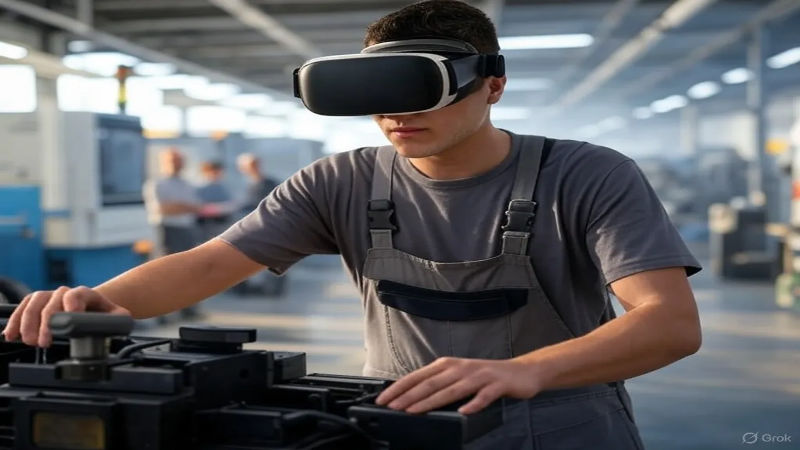
How Extended Reality (XR) Is Transforming the Manufacturing Industry
The manufacturing sector, known for its keen adoption of technology to boost efficiency and safety, is now on the brink of a new technological revolution with Extended Reality (XR). XR, encompassing Virtual Reality (VR), Augmented Reality (AR), and Mixed Reality (MR), is not just a tool for creating immersive video games but a substantial asset in industrial applications.
Enhanced Design and Prototyping
XR technology enables engineers and designers to visualize and interact with their creations in a virtual environment. This capability allows for rapid prototyping, where designs can be adjusted and retested without the high costs and delays associated with physical prototypes. Automotive manufacturers are using VR to simulate car designs and test their aerodynamics in virtual wind tunnels.
Streamlined Training and Education
XR offers an effective solution by providing immersive, hands-on training without the risks associated with real-world training. New employees can practice on virtual equipment as often as needed, learning to operate machinery in a safe, controlled environment.
Real-time Assistance and Maintenance
Augmented Reality shines in maintenance and support by overlaying digital information onto real-world machinery. Technicians wearing AR glasses can receive step-by-step instructions and important safety warnings while they work, reducing downtime and human error.
Enhanced Quality Control
XR technologies integrate seamlessly with other Industry 4.0 technologies, such as sensors and artificial intelligence, to enhance quality control processes. AR can highlight parts that deviate from acceptable parameters during an inspection, ensuring products meet quality standards consistently.
Optimizing Factory Layout and Operations
Mixed Reality (MR) helps optimize manufacturing workflows by allowing managers to simulate factory operations. By visualizing machinery, personnel, and product flows in a virtual space, businesses can identify bottlenecks and improve workflows before making physical changes.
Challenges and Considerations
Despite its benefits, the integration of XR in manufacturing faces several challenges. The high cost of XR technology and the need for significant infrastructure changes can be daunting for smaller manufacturers. Issues such as data security and privacy need careful handling to prevent industrial espionage and data breaches.
The Future Is Now
The potential of XR to revolutionize manufacturing is clear. Companies that embrace this technology will likely find themselves at a competitive advantage, ready to meet the challenges of the modern industrial landscape head-on. XR is not just a futuristic concept but a practical tool that is already reshaping the manufacturing world.