


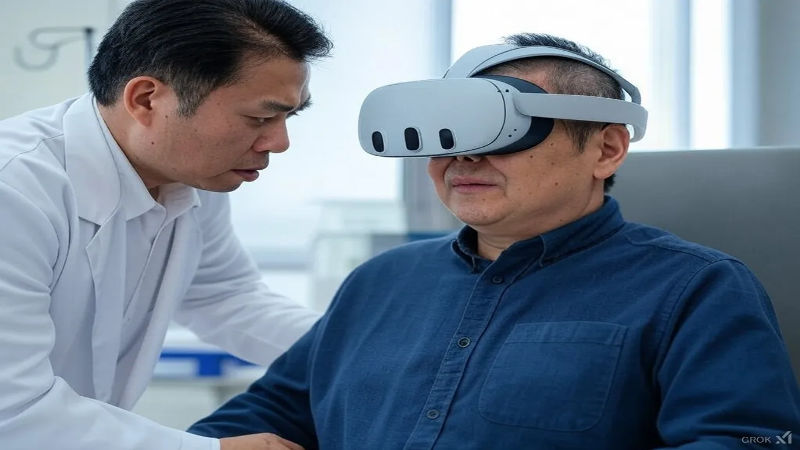
Imagine a world where lost memories could be revived with the help of technology. A story emerged about a man who regained fragments of his memory using Virtual Reality (VR). The immersive experience of revisiting familiar settings, sights, and sounds triggered by VR helped him reconnect with long-lost moments of his past.
The Role of VR in Healthcare
1. Therapy and Rehabilitation
- Mental Health Treatments: VR is being used for cognitive behavioral therapy, phobia treatment, and stress reduction.
- Memory Rehabilitation: For patients suffering from memory loss due to Alzheimer’s or brain injuries, VR can simulate familiar scenarios to stimulate cognitive recall.
- Physical Rehabilitation: Patients recovering from strokes or surgeries can engage in virtual exercises to improve motor skills.
2. Medical Training and Education
- Surgical Simulations: VR allows medical professionals to practice surgeries in a virtual environment.
- Interactive Anatomy Lessons: Students can explore 3D models of the human body.
- Crisis Management Training: Emergency scenarios can be simulated to train healthcare workers.
3. Pain Management
- Patients undergoing chemotherapy or burn treatments have reported reduced pain and anxiety while immersed in calming VR experiences.
- VR games and simulations can divert attention from painful procedures, offering a non-pharmacological alternative to pain relief.
4. Fitness and Wellness
- VR fitness programs help individuals maintain an active lifestyle through engaging workouts.
- Meditation and mindfulness apps in VR guide users through calming experiences.
The Future of VR in Healthcare
As technology advances, VR is set to play an even larger role in personalized healthcare. With integration into wearable devices and AI-driven analytics, VR experiences can adapt to individual patient needs. The potential to integrate VR with other emerging technologies like AR and AI opens up possibilities we are only beginning to explore.
The story of a man regaining his memory with VR is a testament to the transformative power of this technology. From mental health and rehabilitation to medical training and pain management, VR is not just enhancing the healthcare experience — it’s fundamentally changing it.